Solar gets the headlines, but the simplest backup is a battery charged from your own outlet. Plug it in, leave your essentials connected through it, and when the grid drops it takes over. This guide covers what makes a good grid-charged backup and which stations' specs fit best. As always: based on manufacturer specs and public reviews.
How a battery backup without solar works
A power station plugged into the wall can work in pass-through mode: the wall feeds your devices and keeps the battery topped up. When the wall power fails, the station's inverter takes over. The time this takes is the UPS switchover, and it is the single most important spec for this use:
- Under 10 ms: generally seamless, even for desktop computers.
- About 20 ms: fine for fridges, lights, routers and most electronics, can reboot some PCs.
- Not specified: treat as "no UPS"; plug devices in manually when an outage starts.
Specs that matter when you skip solar
AC charging speed
Without panels, the wall is your only refill. Fast AC charging (around an hour for 1 kWh) means you can top up whenever power briefly returns. The DELTA 3 Plus lists about 56 minutes; the AC180 up to 1,440 W input.
Capacity for your outage length
Without solar, capacity is everything you get. For 24 hours of essentials, aim for 2 kWh or a 1 kWh unit you don't mind rationing. Run your numbers in the runtime calculator.
Warranty and cycle life
A UPS-style station lives plugged in for years. LFP chemistry and a long warranty (BLUETTI and Anker list 5 years for the AC180 and F3800) matter more here than portability.
| Model | Capacity | Output | Solar in | Voltage | UPS |
|---|---|---|---|---|---|
| EcoFlow DELTA 3 Plus | 1,024 Wh | 1,800 W | 500 W | 120V | < 10 ms |
| BLUETTI AC180 | 1,152 Wh | 1,800 W | 500 W | 120V | 20 ms |
| Jackery Explorer 1000 v2 | 1,070 Wh | 1,500 W | check | 120V | about 20 ms |
| EcoFlow DELTA Pro 3 | 4,096 Wh | 4,000 W | 2,600 W | 120V / 240V | < 10 ms |
"check" = not confirmed on the sources we used; verify on the manufacturer page before buying.
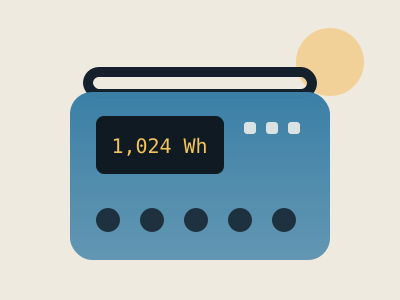
Best grid-charged UPS
EcoFlow DELTA 3 Plus
Best for: UPS for home office, CPAP, router
| Capacity | 1,024 Wh |
|---|---|
| AC output | 1,800 W (surge 3,600 W) |
| Solar input | 500 W |
| Voltage | 120V |
| UPS switchover | < 10 ms |
| Weight | 27.6 lb (12.5 kg) |
| Cycle life | 4,000 to 80% |
| Chemistry | LFP |
| AC charging | 1,500 W, about 56 min |
| X-Boost | 2,200 W for resistive loads |
| Expansion | Optional extra batteries (check EcoFlow for max) |
Strengths
- < 10 ms UPS: the safest pick here for desktop PCs and network gear
- Full recharge from the wall in under an hour
Watch-outs
- Solar figure listed by retailer as 500 W; check EcoFlow for the dual-input total
Specs: manufacturer / retailer spec sheets (source 1). Prices change daily, so we do not print them.
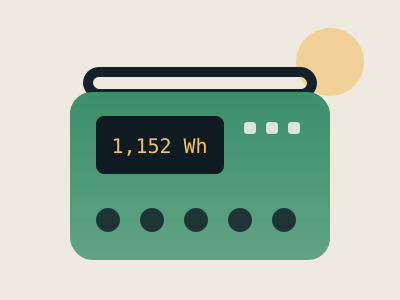
Best value
BLUETTI AC180
Best for: Fridge + essentials during short outages
| Capacity | 1,152 Wh |
|---|---|
| AC output | 1,800 W (surge 2,700 W) |
| Solar input | 500 W |
| Voltage | 120V |
| UPS switchover | 20 ms |
| Weight | 35.27 lb (16 kg) |
| Cycle life | 3,500+ to 80% |
| Chemistry | LFP |
| AC charging | 1,440 W max, 1.3 to 1.8 h |
| Solar window | 12 to 60 V DC, 10 A |
| Warranty | 5 years (BLUETTI page) |
Strengths
- Power Lifting mode runs resistive loads up to 2,700 W
- 5-year warranty
- Fast 1,440 W wall charging
Watch-outs
- 500 W solar input is modest for its capacity
- 60 V solar ceiling limits long series strings
Specs: manufacturer / retailer spec sheets (source 1). Prices change daily, so we do not print them.
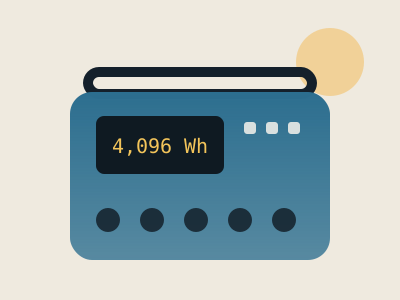
For critical home circuits
EcoFlow DELTA Pro 3
Best for: Whole-home circuits, 240V loads, long outages
| Capacity | 4,096 Wh |
|---|---|
| AC output | 4,000 W (surge 8,000 W) |
| Solar input | 2,600 W |
| Voltage | 120V / 240V |
| UPS switchover | < 10 ms |
| Weight | 113.5 lb (51.5 kg) |
| Cycle life | 4,000 to 80% |
| Chemistry | LFP |
| Outlets | NEMA 5-20R, TT-30, L14-30, 6-20 |
| Parallel | Up to 3 units, 12,000 W combined (per retailer spec) |
Strengths
- 240V output for well pumps and dryers without a second unit
- Very short listed UPS transfer (< 10 ms)
- 2,600 W combined solar input across two PV ports
Watch-outs
- 113.5 lb: it rolls, it is not carried
- Whole-home use needs a transfer switch or Smart Home Panel 2 installed by an electrician
Specs: manufacturer / retailer spec sheets (source 1). Prices change daily, so we do not print them.
When solar starts to make sense
If your area sees multi-day outages after storms, a battery alone will run dry. One or two 200 W portable panels stored in a closet turn a finite backup into a renewable one. You can always add them later.
Portable power stations are designed to be used plug-in, like an appliance. Anything wired into your home (inlet box, transfer switch, sub-panel, batteries feeding a circuit) must be installed by a qualified, licensed electrician and comply with local code. Never backfeed a house through an ordinary outlet.
FAQ
Does a home battery need solar panels?
No. Every power station on this page charges from a normal wall outlet. Solar is an option that lets you recharge during long outages, but a grid-charged battery is a complete backup for short and medium outages.
How long does a power station hold its charge?
Lithium iron phosphate batteries self-discharge slowly, but the electronics also draw a little. Most manuals recommend checking stored units every few months. Keeping a station plugged in as a UPS avoids the problem, if your model supports it.
Can I add solar later?
Yes. Every station here has a solar input. Check its maximum watts and voltage window before buying panels.
Is it worth it for renters?
Often yes: a portable station needs no installation, so it moves with you and needs no landlord approval as long as it is used plug-in, like an appliance.