A power outage tests one thing: whether the energy you stored matches what you actually need to run. That is why this guide starts with two numbers, not with brands: continuous output in watts (W) and capacity in watt-hours (Wh). Get those right and almost any reputable LFP power station will do the job; get them wrong and even the most expensive unit will disappoint.
Everything below is based on manufacturer specs and public reviews. We list our sources under each product and flag specs we could not confirm. We do not print prices because they move every week; use the buttons to see today's price.
The comparison at a glance
| Model | Capacity | Output | Solar in | Voltage | UPS |
|---|---|---|---|---|---|
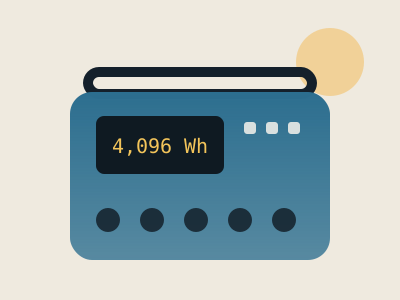
| EcoFlow DELTA Pro 3 | 4,096 Wh | 4,000 W | 2,600 W | 120V / 240V | < 10 ms |
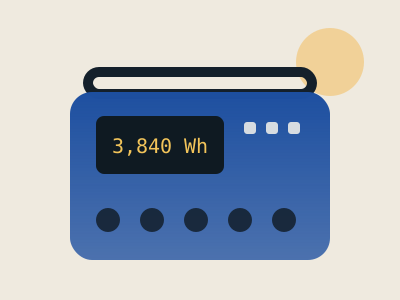
| Anker SOLIX F3800 | 3,840 Wh | 6,000 W | 2,400 W | 120V / 240V | 20 ms (UPS outlets) |
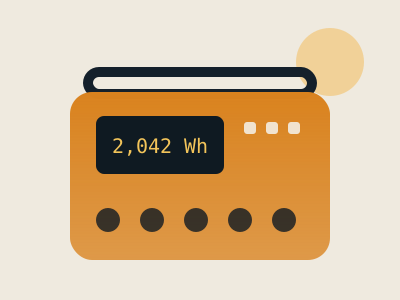
| Jackery Explorer 2000 Plus | 2,042 Wh | 3,000 W | check | 120V (240V by pairing two units) | See spec sheet |
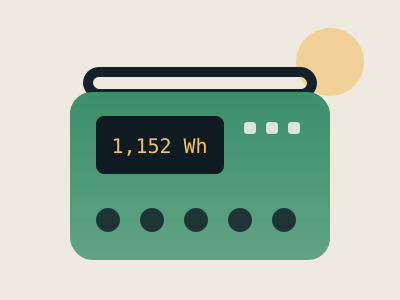
| BLUETTI AC180 | 1,152 Wh | 1,800 W | 500 W | 120V | 20 ms |
| Jackery Explorer 1000 v2 | 1,070 Wh | 1,500 W | check | 120V | about 20 ms |
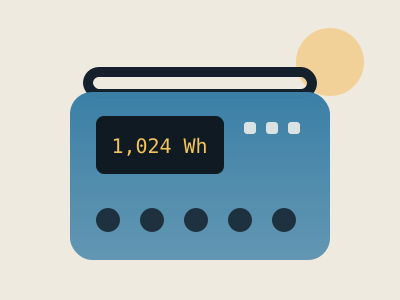
| EcoFlow DELTA 3 Plus | 1,024 Wh | 1,800 W | 500 W | 120V | < 10 ms |
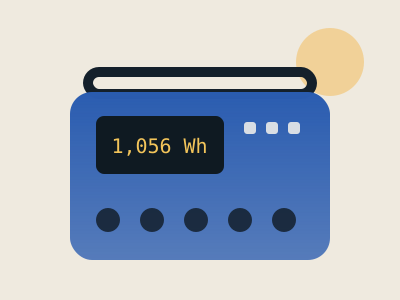
| Anker SOLIX C1000 | 1,056 Wh | 1,800 W | check | 120V | See spec sheet |
"check" = not confirmed on the sources we used; verify on the manufacturer page before buying.
Sizing in two minutes
1. Output (W) decides what can run at the same time. Add the running watts of everything you want on simultaneously. A modern fridge might run at 100 to 200 W with a short start-up surge several times higher; a microwave pulls around 1,000 to 1,200 W; a space heater 1,500 W. If the total is above the station's continuous rating, it shuts off.
2. Capacity (Wh) decides for how long. Multiply each device's average watts by the hours you need it. Then budget for losses: inverters and the battery's usable window mean you typically get around 85% of the label capacity at the outlet.
Example: a 1,024 Wh station feeding a fridge averaging 60 W, a router at 15 W and three LED bulbs (27 W) gives 1,024 × 0.85 ÷ 102 ≈ 8.5 hours. Add solar during the day and the picture changes completely. Try your own devices in our runtime calculator.
3. Voltage decides which appliances are possible. In North America, well pumps, electric dryers and some ranges are 240V. Only the DELTA Pro 3 and the F3800 offer 240V from a single unit in this list; Jackery reaches 240V by linking two 2000 Plus units.
The shortlist, model by model
Best for whole-home circuits
EcoFlow DELTA Pro 3
Best for: Whole-home circuits, 240V loads, long outages
| Capacity | 4,096 Wh |
|---|---|
| AC output | 4,000 W (surge 8,000 W) |
| Solar input | 2,600 W |
| Voltage | 120V / 240V |
| UPS switchover | < 10 ms |
| Weight | 113.5 lb (51.5 kg) |
| Cycle life | 4,000 to 80% |
| Chemistry | LFP |
| Outlets | NEMA 5-20R, TT-30, L14-30, 6-20 |
| Parallel | Up to 3 units, 12,000 W combined (per retailer spec) |
Strengths
- 240V output for well pumps and dryers without a second unit
- Very short listed UPS transfer (< 10 ms)
- 2,600 W combined solar input across two PV ports
Watch-outs
- 113.5 lb: it rolls, it is not carried
- Whole-home use needs a transfer switch or Smart Home Panel 2 installed by an electrician
Specs: manufacturer / retailer spec sheets (source 1). Prices change daily, so we do not print them.
The DELTA Pro 3 is built around one idea: be the heart of a home backup setup. Its 4,096 Wh LFP battery, 4,000 W continuous output and native 120/240V outlets (including L14-30) mean it can feed a transfer switch or EcoFlow's Smart Home Panel 2 directly. The listed transfer time under 10 ms is unusually short for this class. At 113.5 lb it is a roll-around appliance, not something you carry upstairs.
Most AC output
Anker SOLIX F3800
Best for: High-power 240V backup, RV hookups, big expansion
| Capacity | 3,840 Wh |
|---|---|
| AC output | 6,000 W |
| Solar input | 2,400 W |
| Voltage | 120V / 240V |
| UPS switchover | 20 ms (UPS outlets) |
| Weight | See spec sheet (F3800 Plus: 136.7 lb) |
| Cycle life | 3,000+ |
| Chemistry | LFP |
| Outlets | NEMA 5-20R x6, TT-30R, L14-30R |
| Expansion | Up to 6 expansion batteries of 3.84 kWh |
| Warranty | 5 years (Anker page) |
| F3800 Plus | 3,200 W solar input (2 x 1,600 W) |
Strengths
- Highest continuous AC output here: 6,000 W
- TT-30R and L14-30R on the unit
- 5-year warranty listed by Anker
Watch-outs
- 20 ms switchover: fine for most appliances, may reboot sensitive electronics
- Heaviest unit in our shortlist
Specs: manufacturer / retailer spec sheets (source 1 · source 2). Prices change daily, so we do not print them.
Anker's F3800 trades a little capacity (3,840 Wh) for more muscle: 6,000 W continuous, the highest here, through TT-30R and L14-30R outlets. It is the more natural fit if you want to run two big loads at once or plug into an RV inlet. Its UPS switchover is listed at 20 ms on the UPS outlets, which most appliances tolerate but some desktop PCs do not. Note that Anker's product page now lists the F3800 Plus with a higher solar input; check which version a listing refers to. Full details in our specs-based F3800 review.
Best expandable mid-size
Jackery Explorer 2000 Plus
Best for: Expandable mid-size home backup
| Capacity | 2,042 Wh |
|---|---|
| AC output | 3,000 W |
| Voltage | 120V (240V by pairing two units) |
| UPS switchover | See spec sheet |
| Weight | See spec sheet |
| Cycle life | See spec sheet |
| Chemistry | LFP |
| Expansion | 2 to 24 kWh with battery packs (retailer listing) |
Strengths
- 3,000 W continuous in a mid-size unit
- Modular: grows from 2 kWh up to 24 kWh
Watch-outs
- 240V requires two units linked
- Several specs need checking on Jackery's current sheet before you buy
Specs: manufacturer / retailer spec sheets (source 1 · source 2). Prices change daily, so we do not print them.
If 4 kWh is more than you need on day one, the 2000 Plus starts at 2,042 Wh with 3,000 W continuous and grows with battery packs (retailers list 2 to 24 kWh). The catch: 240V requires pairing two units.
Best value 1 kWh class
BLUETTI AC180
Best for: Fridge + essentials during short outages
| Capacity | 1,152 Wh |
|---|---|
| AC output | 1,800 W (surge 2,700 W) |
| Solar input | 500 W |
| Voltage | 120V |
| UPS switchover | 20 ms |
| Weight | 35.27 lb (16 kg) |
| Cycle life | 3,500+ to 80% |
| Chemistry | LFP |
| AC charging | 1,440 W max, 1.3 to 1.8 h |
| Solar window | 12 to 60 V DC, 10 A |
| Warranty | 5 years (BLUETTI page) |
Strengths
- Power Lifting mode runs resistive loads up to 2,700 W
- 5-year warranty
- Fast 1,440 W wall charging
Watch-outs
- 500 W solar input is modest for its capacity
- 60 V solar ceiling limits long series strings
Specs: manufacturer / retailer spec sheets (source 1). Prices change daily, so we do not print them.
The AC180 is the sensible fridge-and-essentials unit: 1,152 Wh, 1,800 W continuous, a 2,700 W Power Lifting mode for resistive loads like kettles, fast 1,440 W wall charging and a 5-year warranty listed by BLUETTI. Its 500 W, 12 to 60 V solar input is the main limitation.

Lightest 1 kWh class
Jackery Explorer 1000 v2
Best for: Portable outage kit you can actually carry
| Capacity | 1,070 Wh |
|---|---|
| AC output | 1,500 W (surge 3,000 W) |
| Voltage | 120V |
| UPS switchover | about 20 ms |
| Weight | 23.8 lb (10.8 kg) |
| Cycle life | about 4,000 |
| Chemistry | LFP |
| AC charging | about 1 h 40 min (about 1 h with app emergency mode) |
Strengths
- Lightest ~1 kWh LFP unit in our shortlist (23.8 lb)
- Fast app-enabled emergency charging
Watch-outs
- 1,500 W continuous: no space heaters or big microwaves
- Solar input to check on Jackery's sheet
Specs: manufacturer / retailer spec sheets (source 1). Prices change daily, so we do not print them.
Best UPS for electronics
EcoFlow DELTA 3 Plus
Best for: UPS for home office, CPAP, router
| Capacity | 1,024 Wh |
|---|---|
| AC output | 1,800 W (surge 3,600 W) |
| Solar input | 500 W |
| Voltage | 120V |
| UPS switchover | < 10 ms |
| Weight | 27.6 lb (12.5 kg) |
| Cycle life | 4,000 to 80% |
| Chemistry | LFP |
| AC charging | 1,500 W, about 56 min |
| X-Boost | 2,200 W for resistive loads |
| Expansion | Optional extra batteries (check EcoFlow for max) |
Strengths
- < 10 ms UPS: the safest pick here for desktop PCs and network gear
- Full recharge from the wall in under an hour
Watch-outs
- Solar figure listed by retailer as 500 W; check EcoFlow for the dual-input total
Specs: manufacturer / retailer spec sheets (source 1). Prices change daily, so we do not print them.
With a listed sub-10 ms switchover, the DELTA 3 Plus is the 1 kWh station we would put under a home office desk, a network rack or a CPAP. It recharges from the wall in about 56 minutes per the retailer spec.
Budget-minded 1 kWh
Anker SOLIX C1000
Best for: Budget-minded 1 kWh backup
| Capacity | 1,056 Wh |
|---|---|
| AC output | 1,800 W |
| Voltage | 120V |
| UPS switchover | See spec sheet |
| Weight | See spec sheet |
| Cycle life | See spec sheet |
| Chemistry | LFP |
Strengths
- 1,800 W continuous in the 1 kWh class
- Widely stocked, often discounted
Watch-outs
- Check UPS time and solar input on Anker's current sheet
Specs: manufacturer / retailer spec sheets (source 1). Prices change daily, so we do not print them.
What actually separates these stations
UPS switchover time
When the grid drops, a station in pass-through mode switches to battery. Under 10 ms is generally seamless for computers; around 20 ms covers fridges, lights, routers and most electronics but can reboot some desktop PCs and NAS boxes. If an unexpected reboot would be a problem, favour the sub-10 ms models or use a dedicated UPS.
Solar input ceiling
A station recharges only as fast as its solar input allows. 500 W of input on a 1 kWh station is fine (roughly a few sunny hours for a full charge); on a 4 kWh station you want 2 kW or more, which is why the DELTA Pro 3 (2,600 W) and F3800 (2,400 W, 3,200 W on the Plus) stand out. Also check the voltage window: panels wired in series must stay under the station's maximum input voltage, including on cold mornings. See panels for power stations.
Expansion
Expansion batteries are usually cheaper per Wh than a second station, and they keep one inverter in charge. All three large stations here are expandable; confirm the maximum on the manufacturer page because figures differ between regions and versions.
Portable power stations are designed to be used plug-in, like an appliance. Anything wired into your home (inlet box, transfer switch, sub-panel, batteries feeding a circuit) must be installed by a qualified, licensed electrician and comply with local code. Never backfeed a house through an ordinary outlet.
Who should not buy a big power station
If your outages are rare and short, a 1 kWh unit plus a small solar panel covers the essentials at a fraction of the cost. If you need to run central AC, an electric range and a heat pump for days, a permanently installed home battery or standby generator, designed by an installer, may be a better fit. Our whole-house backup guide walks through that decision.
FAQ
Is a solar generator the same as a power station?
Yes, in marketing terms. A 'solar generator' is a portable power station (battery + inverter + charger) sold with, or able to accept, solar panels. There is no combustion engine, so it can be used indoors, unlike a gas generator.
How big a solar generator do I need for my house?
Add up the watts of what must run at the same time (that sets the minimum continuous output) and the watt-hours used over the outage (that sets capacity). A fridge, router and lights typically fit a 1 kWh unit for most of a day; well pumps, electric ranges or central AC push you toward 3 to 4 kWh, 240V stations with expansion batteries.
Can a solar generator power a whole house?
A 4 kWh, 240V station can back up selected circuits, sometimes many of them, when connected through a transfer switch or a manufacturer home panel installed by a licensed electrician. Powering an entire all-electric house for days usually requires several expansion batteries and solar.
Why do you not publish star ratings?
Because we have not lab-tested these units, and a numerical score would suggest otherwise. We compare published specifications and summarize patterns in public reviews instead.
LFP or NMC?
Every station on this page uses LFP (lithium iron phosphate), which manufacturers rate for thousands of cycles and which is generally considered more thermally stable than NMC. That is why we no longer shortlist NMC units for home backup.