If you have narrowed home backup down to "one big 240V box on wheels", it is almost always these two. Both use LFP batteries, both offer 120/240V, both connect to a home panel. The differences are in the details, and the details depend on what you plan to power. This comparison is based on manufacturer specs and public reviews; we have not lab-tested either unit.
Choose the F3800 if peak output matters (6,000 W for several heavy 240V loads at once). Choose the DELTA Pro 3 if you value a little more capacity, a shorter UPS switchover for electronics, and slightly lower weight.
Specs side by side
| Spec | EcoFlow DELTA Pro 3 | Anker SOLIX F3800 |
|---|---|---|
| Capacity | 4,096 Wh | 3,840 Wh |
| Continuous AC output | 4,000 W (8,000 W surge) | 6,000 W |
| Voltage | 120V / 240V | 120V / 240V |
| Solar input | 2,600 W (1,000 + 1,600 W) | 2,400 W (F3800 Plus: 3,200 W) |
| UPS switchover | < 10 ms | 20 ms (UPS outlets) |
| Weight | 113.5 lb (51.5 kg) | check (F3800 Plus: 136.7 lb) |
| Cycle life | 4,000 to 80% | 3,000+ |
| Big outlets | TT-30, L14-30, 6-20 | TT-30R, L14-30R |
| Warranty | check EcoFlow | 5 years (Anker page) |
Sources: B&H spec sheet for DELTA Pro 3; Anker product page and retailer listing for F3800. "check" = not confirmed in our sources.
Output: the F3800's big advantage
6,000 W vs 4,000 W is the clearest difference. In a home backup scenario, the critical moment is when several motors start together: a well pump, the fridge compressor and a furnace blower. More continuous output gives more headroom. If your critical list includes a well pump plus other 240V loads, the F3800's margin is valuable. EcoFlow's answer is paralleling: the retailer listing mentions up to three DELTA Pro 3 units for 12,000 W combined, at a correspondingly higher cost.
Capacity and expansion
The DELTA Pro 3 starts slightly larger (4,096 Wh vs 3,840 Wh). Both accept expansion batteries; Anker lists up to six 3.84 kWh expansion batteries for the F3800 family. Its page also shows a much larger total that does not match that arithmetic, so we recommend confirming the maximum with Anker for your region and version.
UPS: who protects electronics better?
The DELTA Pro 3 lists under 10 ms, the F3800 20 ms on its UPS outlets. For fridges, lights and routers both are fine. For desktop computers, NAS or home servers, the shorter switchover is safer; alternatively put a small dedicated UPS between the station and that equipment.
Solar charging
For long outages, solar input decides how fast you recover. The DELTA Pro 3's 2,600 W is split across a high-voltage and a lower-voltage port. The F3800 Plus raises Anker's figure to 3,200 W across two 1,600 W ports. Whichever you choose, the practical limit is usually your available space for panels.
Both products
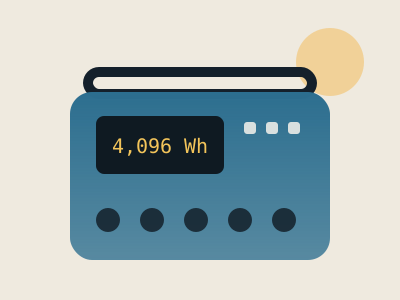
Whole-home circuits, 240V loads, long outages
EcoFlow DELTA Pro 3
Best for: Whole-home circuits, 240V loads, long outages
| Capacity | 4,096 Wh |
|---|---|
| AC output | 4,000 W (surge 8,000 W) |
| Solar input | 2,600 W |
| Voltage | 120V / 240V |
| UPS switchover | < 10 ms |
| Weight | 113.5 lb (51.5 kg) |
| Cycle life | 4,000 to 80% |
| Chemistry | LFP |
| Outlets | NEMA 5-20R, TT-30, L14-30, 6-20 |
| Parallel | Up to 3 units, 12,000 W combined (per retailer spec) |
Strengths
- 240V output for well pumps and dryers without a second unit
- Very short listed UPS transfer (< 10 ms)
- 2,600 W combined solar input across two PV ports
Watch-outs
- 113.5 lb: it rolls, it is not carried
- Whole-home use needs a transfer switch or Smart Home Panel 2 installed by an electrician
Specs: manufacturer / retailer spec sheets (source 1). Prices change daily, so we do not print them.
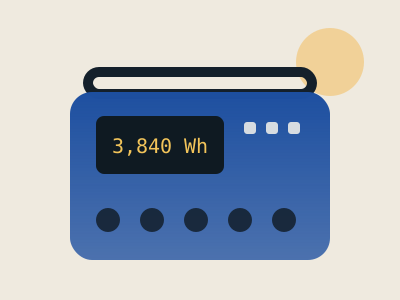
High-power 240V backup, RV hookups, big expansion
Anker SOLIX F3800
Best for: High-power 240V backup, RV hookups, big expansion
| Capacity | 3,840 Wh |
|---|---|
| AC output | 6,000 W |
| Solar input | 2,400 W |
| Voltage | 120V / 240V |
| UPS switchover | 20 ms (UPS outlets) |
| Weight | See spec sheet (F3800 Plus: 136.7 lb) |
| Cycle life | 3,000+ |
| Chemistry | LFP |
| Outlets | NEMA 5-20R x6, TT-30R, L14-30R |
| Expansion | Up to 6 expansion batteries of 3.84 kWh |
| Warranty | 5 years (Anker page) |
| F3800 Plus | 3,200 W solar input (2 x 1,600 W) |
Strengths
- Highest continuous AC output here: 6,000 W
- TT-30R and L14-30R on the unit
- 5-year warranty listed by Anker
Watch-outs
- 20 ms switchover: fine for most appliances, may reboot sensitive electronics
- Heaviest unit in our shortlist
Specs: manufacturer / retailer spec sheets (source 1 · source 2). Prices change daily, so we do not print them.
Transfer switches, power inlets, sub-panels and hard-wired batteries change your home's wiring. In most places this legally requires a licensed electrician and sometimes a permit and utility notification. This page explains the options so you can talk to an electrician, it is not installation instructions.
FAQ
Which is better for a whole house, DELTA Pro 3 or F3800?
On paper the F3800 has more output (6,000 W vs 4,000 W), useful when several large 240V loads run together. The DELTA Pro 3 has slightly more capacity (4,096 Wh vs 3,840 Wh) and a shorter listed UPS switchover (under 10 ms vs 20 ms). For most critical-circuit setups either works; choose by your largest simultaneous load and how sensitive your electronics are.
Do both have 240V output?
Yes. The DELTA Pro 3 lists 120V and 240V outlets including L14-30 and 6-20; the F3800 lists 120/240V via its L14-30R outlet.
Which charges faster from solar?
The DELTA Pro 3 lists 2,600 W combined solar input. The original F3800 lists 2,400 W, and Anker's current page for the F3800 Plus lists 3,200 W (2 x 1,600 W). Check which F3800 version you are buying.
Is the F3800 Plus the same as the F3800?
No. Anker's current product page shows the F3800 Plus, with higher solar input and listed weight of 136.7 lb. Some spec figures differ between the two, so always confirm the exact model on the listing.