Transfer switches, power inlets, sub-panels and hard-wired batteries change your home's wiring. In most places this legally requires a licensed electrician and sometimes a permit and utility notification. This page explains the options so you can talk to an electrician, it is not installation instructions.
A power station on its own powers whatever you plug into it. To power the furnace blower, the well pump or hard-wired lights, the station has to feed your home's circuits, and that requires a transfer device that isolates your home from the grid. This page explains the options; your electrician designs the installation. Based on manufacturer documentation and public sources.
Option 1: manual transfer switch (selected circuits)
A small sub-panel next to your main panel, wired to a handful of critical circuits. Each circuit gets a switch: "line" (grid) or "generator" (your station). The station connects through a power inlet outside or in the garage.
- Pros: simple, you choose exactly which circuits get backup, you can't overload circuits you didn't select.
- Cons: limited number of circuits; manual operation.
Option 2: inlet box + main-panel interlock
A mechanical interlock on your main panel physically prevents the main breaker and the generator breaker from being on together. Any circuit can be powered, so you manage loads by switching breakers.
- Pros: flexible; works with your existing panel if an approved interlock exists for it.
- Cons: easy to overload the station if you leave large circuits on; must be listed for your panel.
Option 3: manufacturer smart home panel
Brands sell panels designed for their stations: EcoFlow's Smart Home Panel 2 (listed for the DELTA Pro 3), and Anker's home power panel for SOLIX stations. They typically add automatic switching, per-circuit monitoring in an app, and can manage several stations.
- Pros: automatic switchover, app control, designed for the station.
- Cons: locks you into one brand; higher cost.
Which stations can feed a home connection?
You need a station with an outlet matching a generator inlet, typically L14-30 for 120/240V. Both stations below list one. Smaller 120V-only stations can sometimes feed a 120V-only transfer setup; ask your electrician.
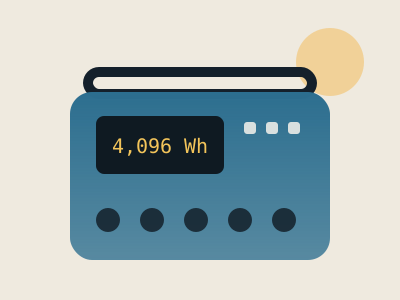
Whole-home circuits, 240V loads, long outages
EcoFlow DELTA Pro 3
Best for: Whole-home circuits, 240V loads, long outages
| Capacity | 4,096 Wh |
|---|---|
| AC output | 4,000 W (surge 8,000 W) |
| Solar input | 2,600 W |
| Voltage | 120V / 240V |
| UPS switchover | < 10 ms |
| Weight | 113.5 lb (51.5 kg) |
| Cycle life | 4,000 to 80% |
| Chemistry | LFP |
| Outlets | NEMA 5-20R, TT-30, L14-30, 6-20 |
| Parallel | Up to 3 units, 12,000 W combined (per retailer spec) |
Strengths
- 240V output for well pumps and dryers without a second unit
- Very short listed UPS transfer (< 10 ms)
- 2,600 W combined solar input across two PV ports
Watch-outs
- 113.5 lb: it rolls, it is not carried
- Whole-home use needs a transfer switch or Smart Home Panel 2 installed by an electrician
Specs: manufacturer / retailer spec sheets (source 1). Prices change daily, so we do not print them.
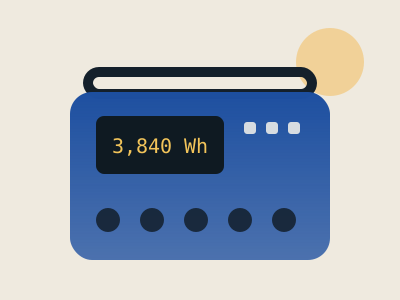
High-power 240V backup, RV hookups, big expansion
Anker SOLIX F3800
Best for: High-power 240V backup, RV hookups, big expansion
| Capacity | 3,840 Wh |
|---|---|
| AC output | 6,000 W |
| Solar input | 2,400 W |
| Voltage | 120V / 240V |
| UPS switchover | 20 ms (UPS outlets) |
| Weight | See spec sheet (F3800 Plus: 136.7 lb) |
| Cycle life | 3,000+ |
| Chemistry | LFP |
| Outlets | NEMA 5-20R x6, TT-30R, L14-30R |
| Expansion | Up to 6 expansion batteries of 3.84 kWh |
| Warranty | 5 years (Anker page) |
| F3800 Plus | 3,200 W solar input (2 x 1,600 W) |
Strengths
- Highest continuous AC output here: 6,000 W
- TT-30R and L14-30R on the unit
- 5-year warranty listed by Anker
Watch-outs
- 20 ms switchover: fine for most appliances, may reboot sensitive electronics
- Heaviest unit in our shortlist
Specs: manufacturer / retailer spec sheets (source 1 · source 2). Prices change daily, so we do not print them.
Questions to ask your electrician
- Which circuits are critical and what is their combined running and starting load?
- Is there a listed interlock kit for my panel?
- What permits and inspections apply here?
- Does my utility need to be notified?
- Where should the inlet go, and what cable length and gauge?
FAQ
Can I install a transfer switch myself?
In most jurisdictions, modifying your electrical panel requires a licensed electrician, and often a permit and inspection. Beyond legality, mistakes can cause fires or energise utility lines. Hire a professional.
What is backfeeding and why is it dangerous?
Backfeeding is powering your house wiring through a regular outlet with a double-male cord. It bypasses protection and can send power into utility lines, endangering line workers. Never do it.
Which plug do I need?
Many home generator inlets use a 4-prong L14-30 (120/240V, 30 A) connector. The DELTA Pro 3 and F3800 both list an L14-30 outlet. Your electrician will confirm the right inlet and cable.
Manual or automatic?
Manual switches and interlocks require you to flip a switch during an outage. Manufacturer smart panels can switch automatically. Automatic is more convenient and usually more expensive.